Support our community to restore Taranaki's natural environment
We can’t do it alone. We need your help! Any money you donate will go directly to supporting Taranaki projects restoring and protecting biodiversity. You get to choose where it goes to. And if you can’t help out with cash, you can help in other ways.
Protecting Taranaki Kiwi – A Collaborative Success Story
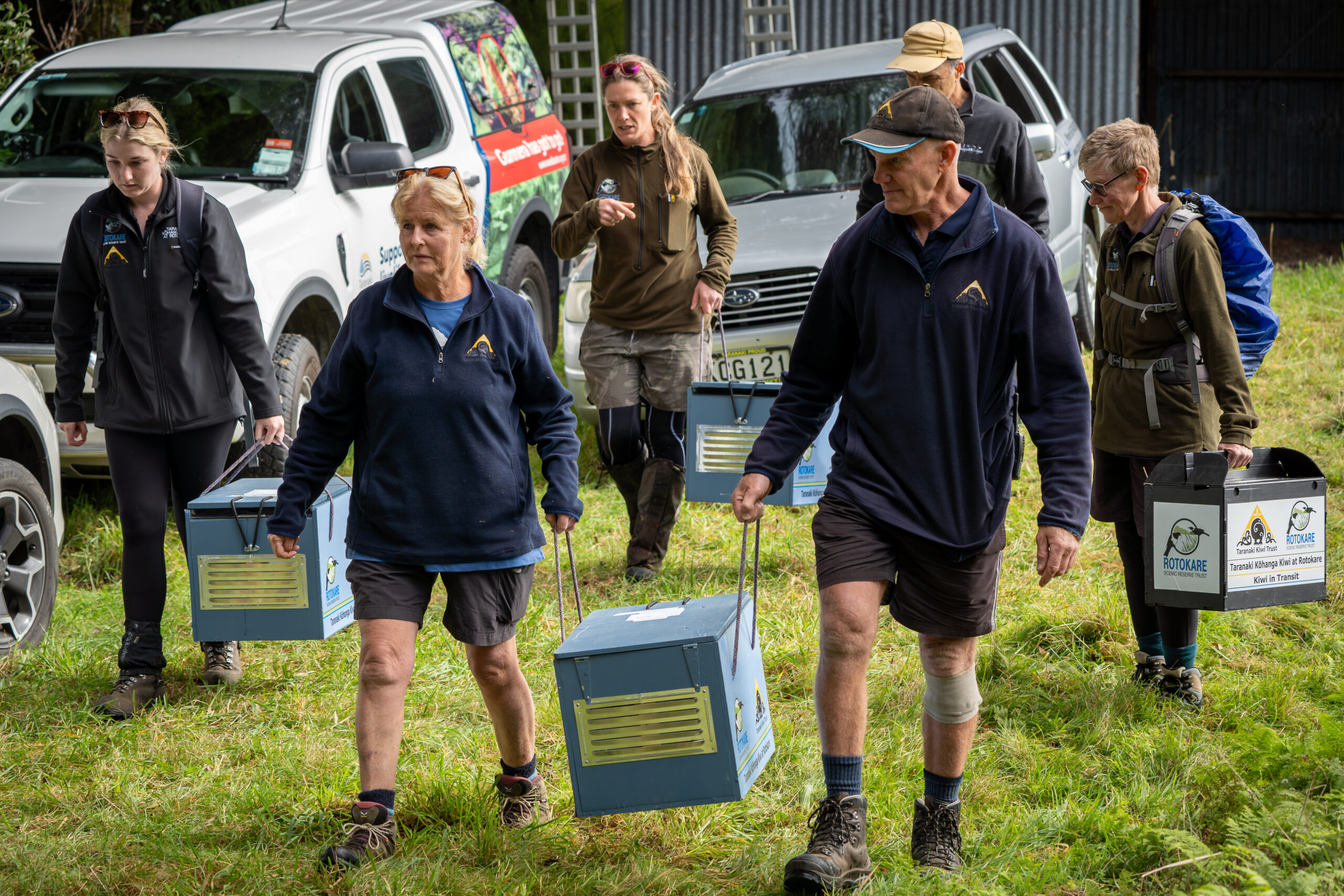
In the lush, rugged landscapes of Taranaki, a passionate network of organisations and individuals are working together to turn the tide on declining kiwi numbers. At the centre of this effort are three key conservation groups: the East Taranaki Environment Collective (ETEC), the Taranaki Kiwi Trust (TKT), and the Rotokare Scenic Reserve Trust (RSRT).
Together, they’re proving that collaboration, community, and commitment can restore ecosystems — and bring the call of the kiwi back to our forests.
The western brown kiwi, like all kiwi species, is under serious threat. Despite its cultural significance as New Zealand’s national bird, unmanaged kiwi populations are declining at an alarming rate of 2% per year. If this trend continues, kiwi could disappear from the wild within two generations.
In response to this crisis, the Taranaki Kiwi Trust was founded in 2001. This charitable trust is dedicated to protecting and preserving the Western Brown Kiwi population throughout Taranaki. Motivated by a deep connection to the region’s natural heritage, the Trust works tirelessly to ensure that future generations will still be able to hear and see wild kiwi in Taranaki’s forests and mountains.
The support of the community is essential. Donations and volunteer efforts directly fund kiwi monitoring, predator control, education programmes, and habitat restoration.
Further inland, the East Taranaki Environment Collective, administered by the East Taranaki Environment Trust, is leading an ambitious landscape-scale restoration project over 18,000 hectares of bush and farmland stretching from Whangamōmona to Purangi.
ETEC’s primary focus is on pest control — the key to giving kiwi and other native wildlife a fighting chance. Their extensive predator network includes over 1,300 DOC 200 and 600 DOC 250 traps targeting mustelids like stoats and weasels, and more than 1,200 self-resetting A12 and A24 traps to control rats and possums. Goat control and occasional toxin operations complement this work, making the area increasingly hospitable for threatened species.
Thanks to this effort, ETEC’s landscape now supports around one pair of kiwi per 12.5–15 hectares — a strong result in the face of nationwide population decline. Long-term protection in this area is also helping other vulnerable native species such as the North Island kōkako and the long-tailed bat.
In 2012, the Taranaki Kiwi Trust partnered with the Rotokare Scenic Reserve Trust to establish the Taranaki Kōhanga Kiwi at Rotokare (TKKR) — a groundbreaking kiwi breeding programme designed to repopulate Taranaki and the wider western North Island.
Rotokare Scenic Reserve Trust is a 230-hectare, predator-free reserve just east of Eltham. The sanctuary’s fully fenced environment, which includes native forest, wetland, and a natural lake, provides a safe haven where kiwi can breed and thrive. Over the years 40 founder kiwi have been introduced to the site, most through Operation Nest Egg, which involves hatching and raising chicks in protected conditions before releasing them into the sanctuary.
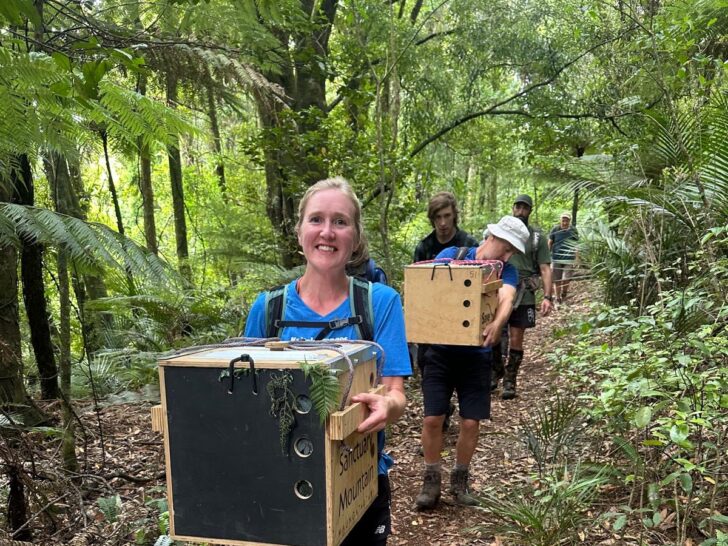
More than a decade later, the Rotokare kōhanga is now home to a flourishing population of over 300 kiwi — a thriving nursery that’s already delivering on its mission. Since 2020, the project has successfully translocated over 200 kiwi to other protected areas, including the Totara Block, Kaitake Ranges, Sanctuary Mountain Maungatautari in Waikato, Taranaki Mounga, the Capital Kiwi Project and the Omoana area.
TKKR’s success is driven by a dedicated team of over 20 staff and volunteers, including 12 accredited kiwi handlers. Together, they conduct monitoring, manage habitat, and continuously improve conservation practices.
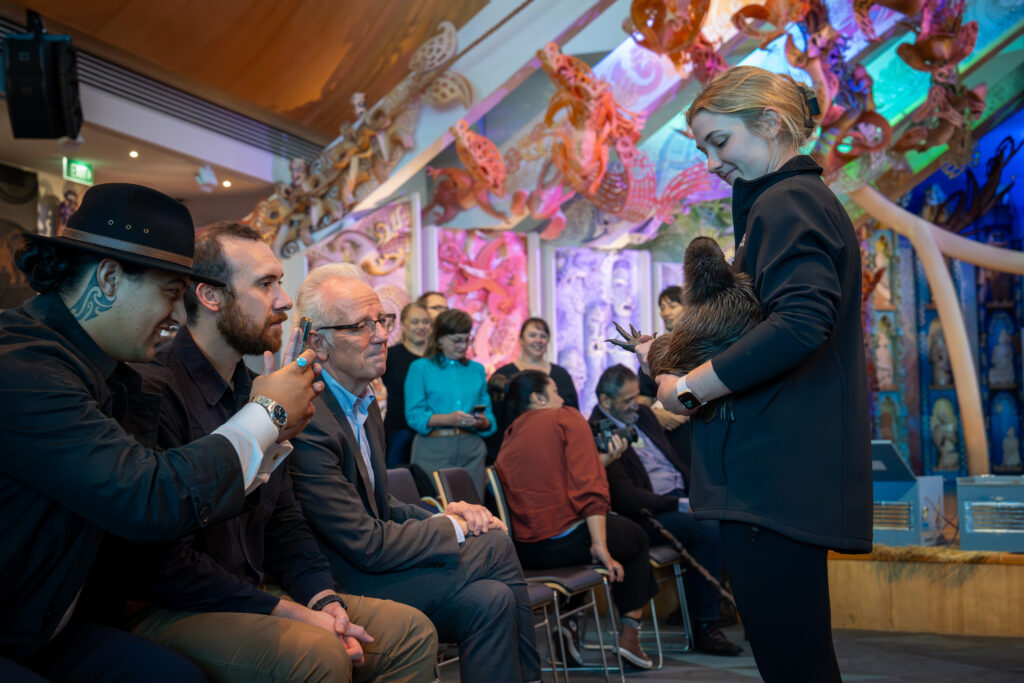
TKKR has become a national model for kiwi recovery, demonstrating how community-based conservation and strategic partnerships can lead to measurable results. A permanent, public-facing breeding population is now established at Rotokare, kiwi calls are now regularly heard at night in the sanctuary, and guided night tours often give visitors a rare chance to hear and glimpse these shy, nocturnal birds in their natural habitat.
www.etec.org.nz www.rotokare.org.nz www.taranakikiwi.org.nz